Introduction
I make it a habit to learn as much as I can from others, so every week I listen to an assortment of podcasts covering topics such as leadership, communication, techology, security and more.
Here are some recent podcasts that I found interesting and worth a listen, along with some of my own thoughts, based on nearly two decades of experience as a military officer, IT leader, and CISO.
Topics for this post include:
- Learning From a Proven Leader (Jamie Dimon)
- Servant Leadership
- Traits of Tranformative Healthcare Leaders
Learning From A Proven Leader
LISTEN: How Leaders Lead with David Novak: Leading with Real - Jamie Dimon
I really enjoy listening to successful leaders share their knowledge and this two-part interview with Jamie Dimon was no exception.
From his ideas on how leaders should act (“Be the leader you would want your kids to work for”) to his thoughts on the economy, fighting for good, and the importance of recognizing and learning from others, I thought it was a great listen.
Servant Leadership
LISTEN: No Bullshi!t Leadership - Servant Leadership: Does it Work?
This episode focuses on the concept of “Servant Leadership”, which for those that aren’t familiar, was developed by Robert Greenleaf in the 1970s. Martin compares and contrasts servant leadership to a results-based leadership model to illustrate how they differ, what components of Servant Leadership might be valuable, as well as possible downsides.
I agree with Martin that there are concepts of Servant Leadership that, if applied the wrong way, can be counter-productive. But in fairness I think that goes for any leadership approach. Adopting a servant leadership style does not prevent you from achieving results, nor does it have to mean that the leader is relinquishing all control, catering to an employee’s every whim, or losing his or her authority.
I believe good leaders should be students of many different approaches and be open to incorporating any effective concept that will net good results. Leaders may also need to adapt their styles to the organizational culture (without losing their own identity or effectiveness, of course).
For anyone interested in learning more about Servant Leadership, I would recommend the book “Servant Leadership in Action”
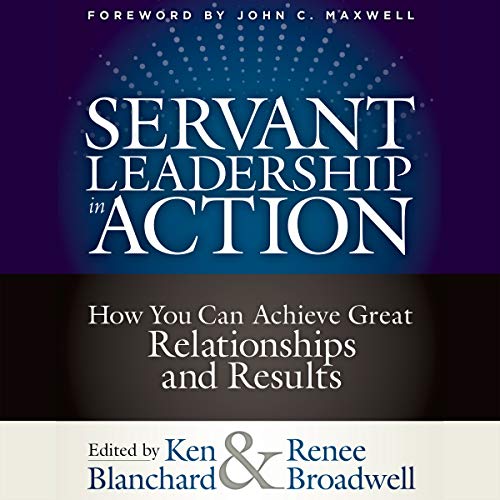
There is a quote in the book that I think represents the concept of Servant Leadership pretty well
“When you become a leader, you give up your right to think of yourself first”.
I tend to think of Servant Leadership as similar to being a parent. You have been entrusted with the well-being of others and you are largely responsible for their success. It doesn’t mean you relinquish all control and let your team dictate the priorities. We don’t do that as parents and we can’t do that as professional leaders either. However, as a leader (and a parent) you are, in some ways, working for those that you lead and not the other way around.
There are other great concepts from servant leadership including building a community, empowering others, and defining a clear purpose – which, for those that are familiar, is very much aligned with Simon Sinek’s concept of “Finding Your Why” (and he contributes to this book too).
I won’t delve any deeper into the concept of servant leadership here, but I highly recommend listening to this podcast and then reading Servant Leadership in Action.
Traits of Tranformative Healthcare Leaders
LISTEN: Becker’s Healthcare Podcast
In this episode, Theo Theodosiou talks about the distinguishing traits of a transformative healthcare leader.
I agree with his views that a leader cannot sustain a tranformational journey by themselves. In fact, the journey itself shouldn’t be about the leader at all. At the center of a successful transformation is vision, mission, and purpose – not an individual. That doesn’t mean a leader isn’t the one that helps develop the vision and set the direction – but they must be careful not to make it all about them.
In this context he also discusses the difference between building a team (where there is clear reliance on the leader) vs building a community, which does not rely on having a leader at its center and can ultimately sustain without them. I see parallels between this and the concept of servant leadership discussed previously. As Theo also states, the leader is not the one creating value. Instead, they create the opportunity for others to provide value.
He covers other distinguishing traits such as leadership types (e.g. drama leaders that find purpose in a crisis) and the importance of recognizing equal worth. I recommend giving this one a listen.
Continue the Conversation
I enjoy connecting with and learning from others, so reach out to me on LinkedIn and Twitter.